
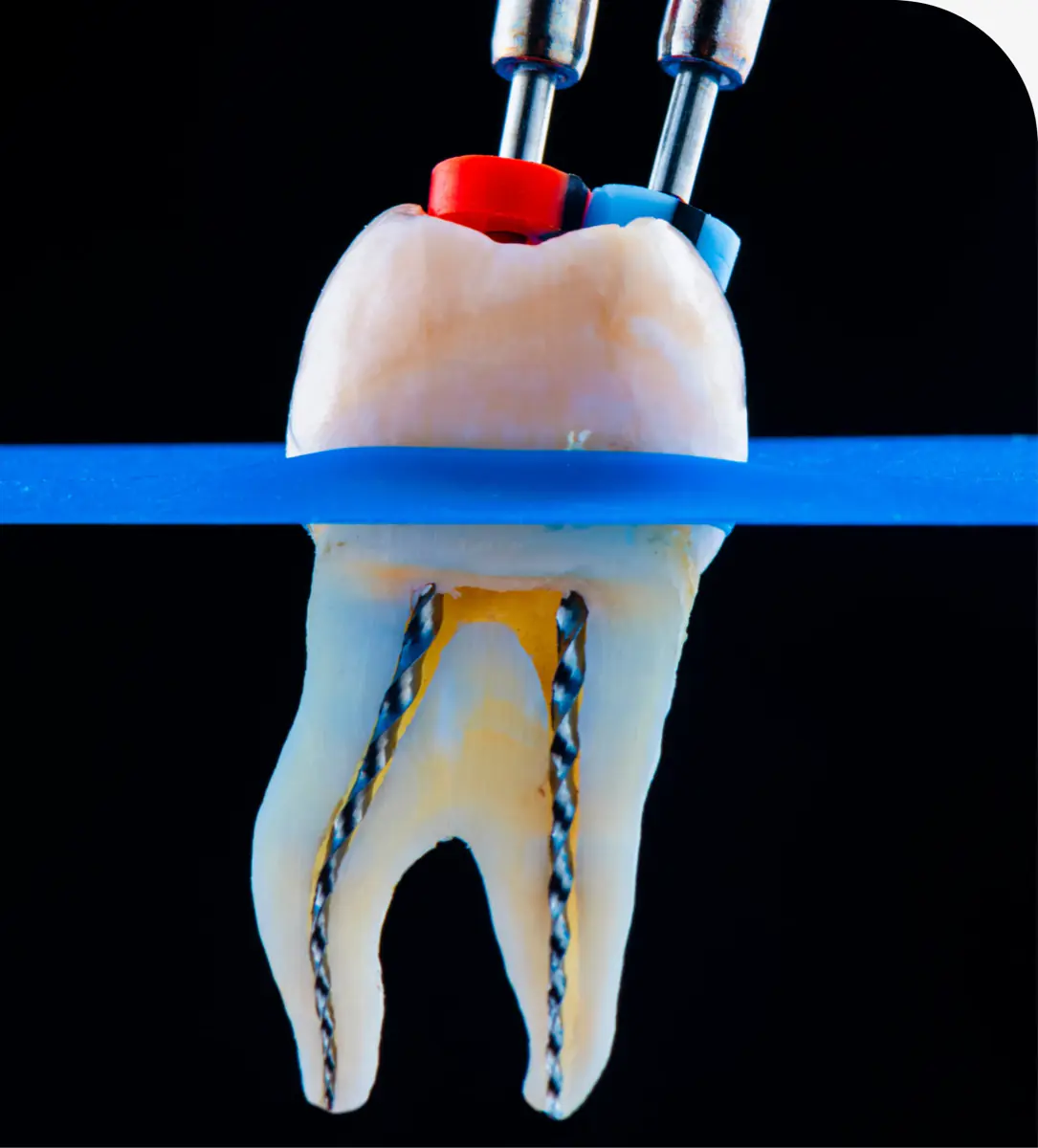
Root Canal Therapy in Mineral Wells, TX
Modern root canal treatment is comfortable, efficient, and saves your natural tooth. No referral needed — Dr. Lewis performs root canals right here in our office.
Signs You May Need a Root Canal
Severe Toothache
Persistent or throbbing pain that does not go away with OTC medication.
Lingering Sensitivity
Pain to hot or cold that lasts long after the stimulus is removed.
Darkened Tooth
Tooth discoloration indicating nerve damage or internal decay.
Gum Swelling
Tenderness, swelling, or a pimple-like bump near the tooth root.
Pain When Biting
Sharp pain when chewing or applying pressure to a specific tooth.
No Symptoms
Some infections are detected only through X-rays during routine exams.
What Is a Root Canal?
A root canal removes infected or damaged tissue (the pulp) from inside your tooth, then cleans, disinfects, and seals the space. The tooth is preserved and protected with a crown afterward. Saving a natural tooth prevents bone loss, maintains proper chewing, and avoids the cost of replacement with an implant or bridge.
- No more pain: The infected nerve is removed, eliminating the source of your toothache.
- One to two visits: Most root canals are completed in a single appointment.
- Comfortable: Modern anesthesia means the procedure feels similar to getting a filling.
- Crown protection: A custom crown is placed to restore full strength and appearance.
The Root Canal Process
Diagnosis
Digital X-rays confirm infection location and extent. The tooth is numbed completely.
Treatment
Infected pulp is removed, canals are cleaned and shaped with rotary instruments, then filled and sealed.
Restoration
A custom crown is placed to protect the tooth and restore full function and appearance.
Root Canal FAQs
Is a root canal painful?
Modern root canals are no more uncomfortable than getting a filling. Local anesthesia ensures you feel no pain during the procedure.
How much does a root canal cost in Texas?
Front teeth typically cost $700–$1,200; molars $900–$1,500, not including the crown. Most insurance covers a portion.
How do I know if I need a root canal?
Severe toothache, lingering sensitivity, darkening, swelling, or X-ray findings. Some infected teeth have no symptoms.
Root canal vs. extraction — which is better?
Saving a natural tooth is almost always preferred. It preserves bone, chewing function, and avoids replacement costs.
Tooth Pain? Save It.
A root canal can relieve your pain and save your natural tooth.